 日本語
日本語
The Fujitsu FM-11 AD2 is quite a beast of a machine, weighing in at 19kg/47lbs when in its box (without manuals!). This is from its initial test two years ago. The machine powered up and booted off a BASIC floppy, but I didn't want to use the undoubtedly rare system disks very much. This is from its initial test two years ago. The machine powered up and booted off a BASIC floppy, but I didn't want to use the undoubtedly rare system disks very much. 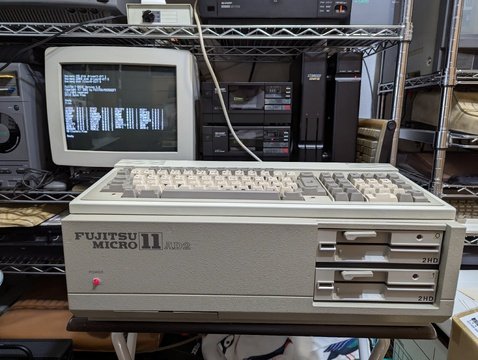 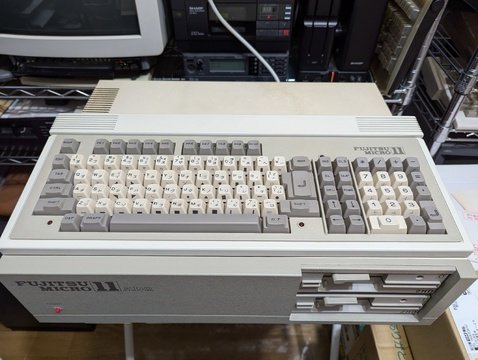 It's a beauty of a machine, and was kept in quite good condition over the decades. It came with the original box, keyboard, and system disks. 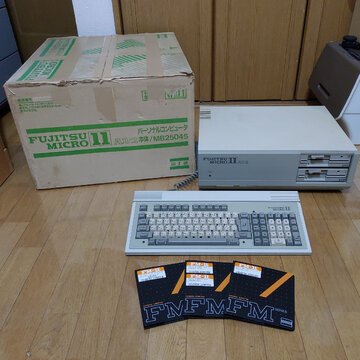 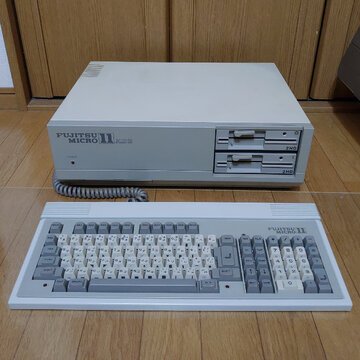 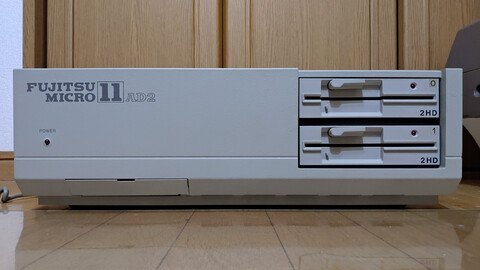 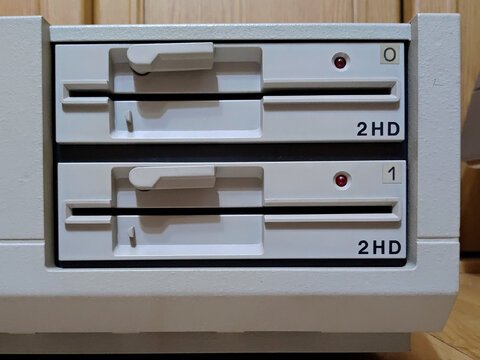 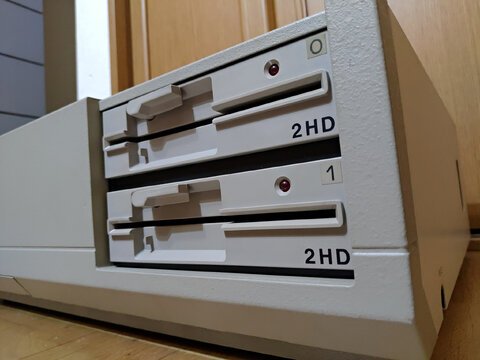 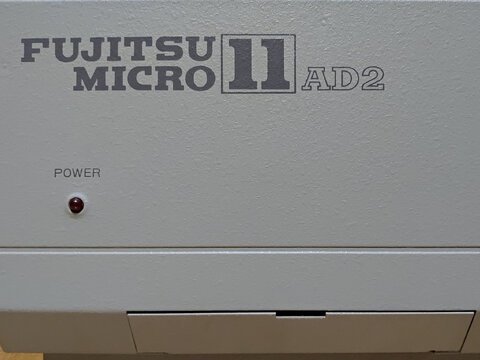 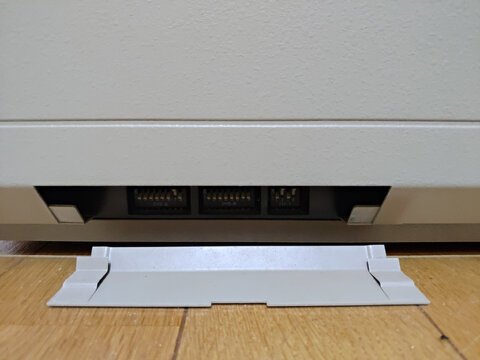 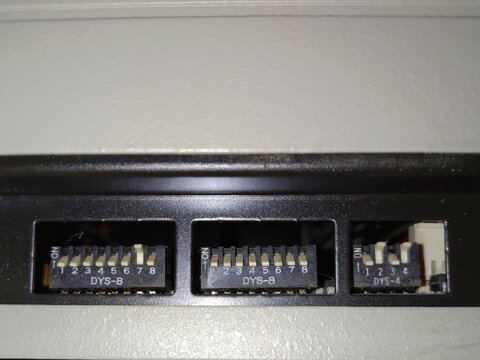 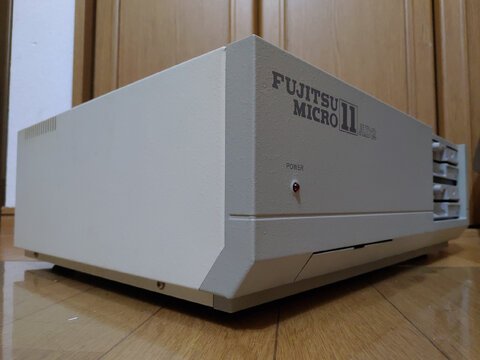 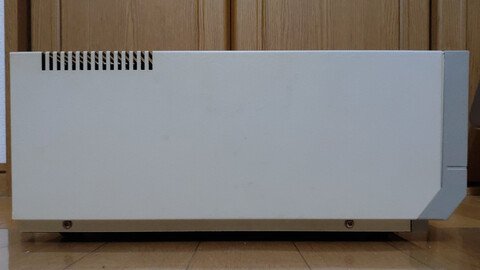 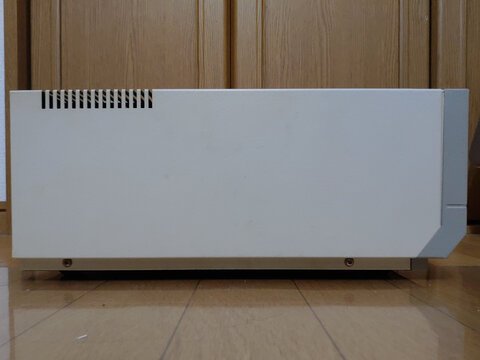 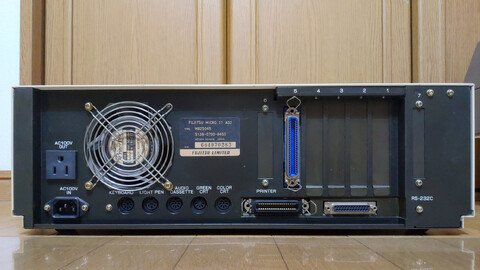 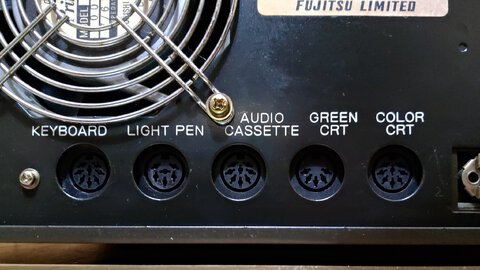 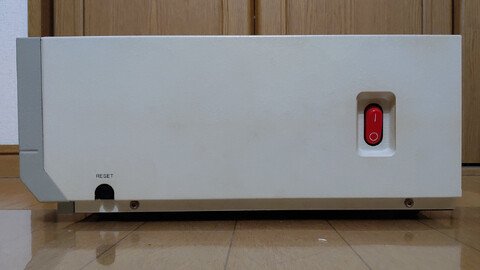 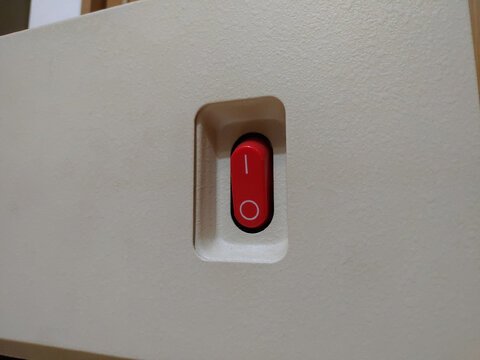 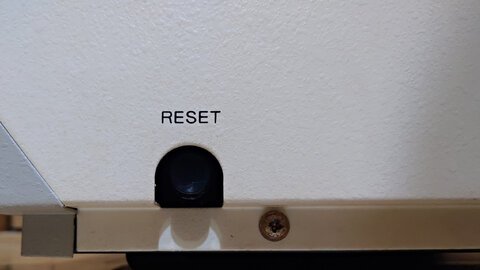 The box arrived all taped up. Annoying, but I get it. It can be pretty challenging to wrap up something like this if you're doing it by yourself, so the guy just used the box as the shipping box. Besides the tape, the box was mostly in good shape. 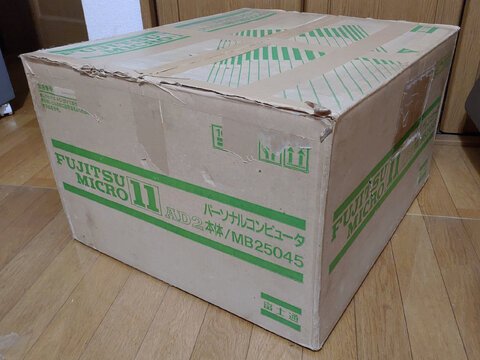 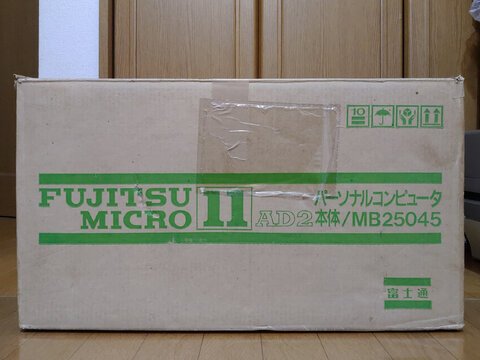 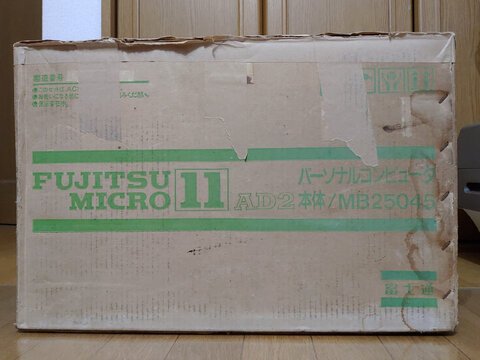 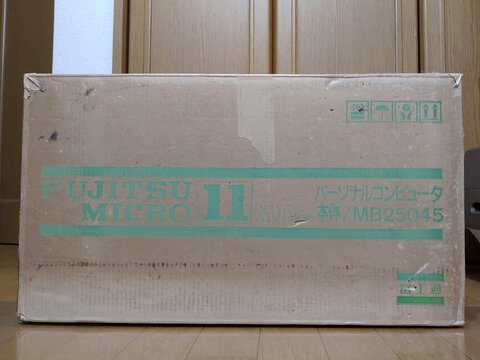 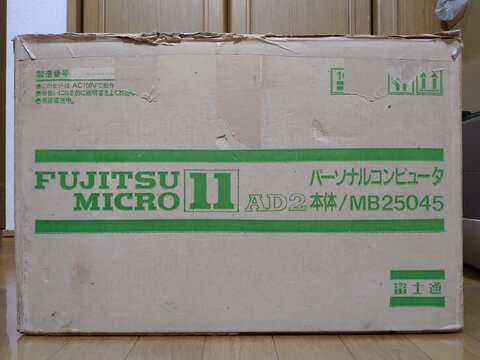 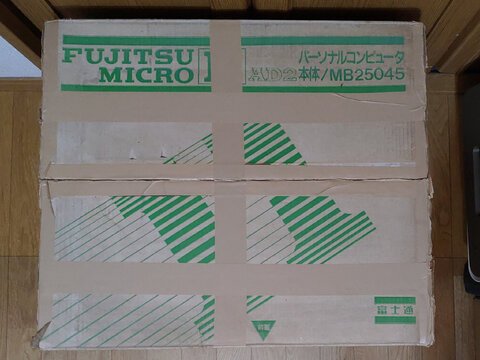 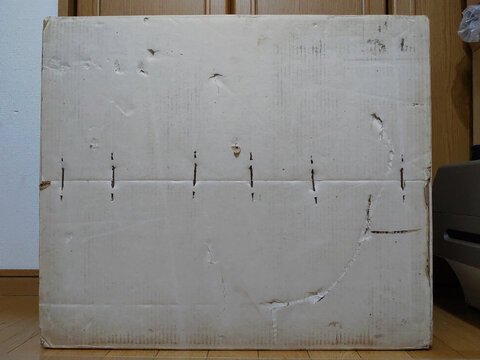 The keyboard was a treat to type on. Today's modern mechanical keyboards are fantastic, but there's something satisfying about the clank of the high-quality keyboards of this era. I also dig the heavy-gauge coiled cable on it. 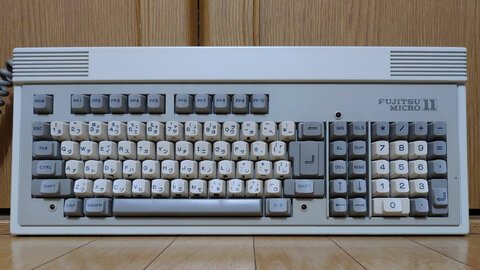 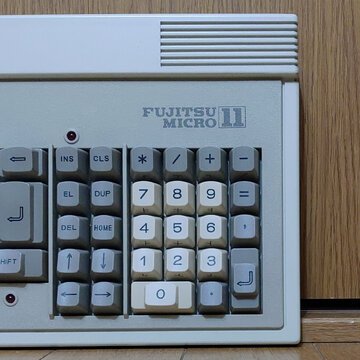 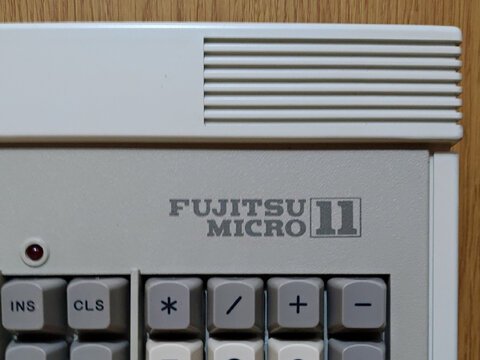 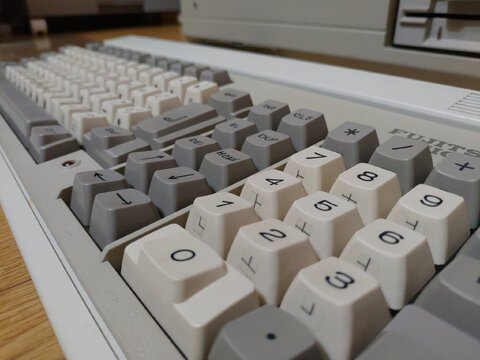 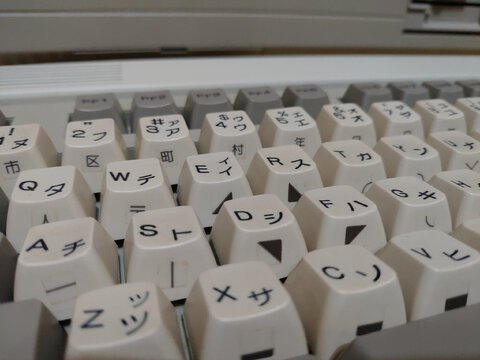 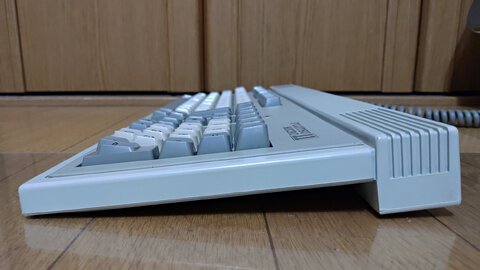 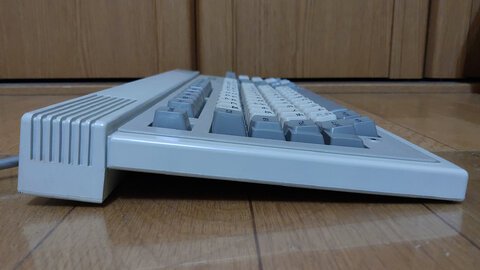 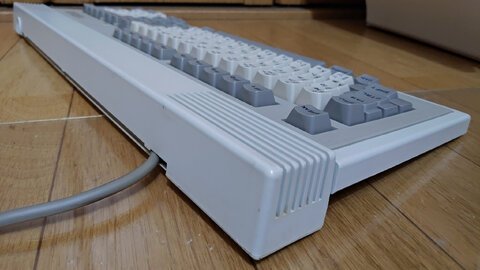 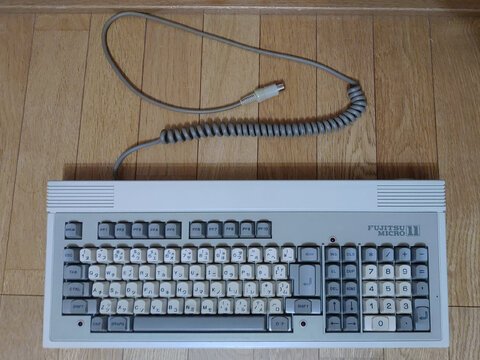 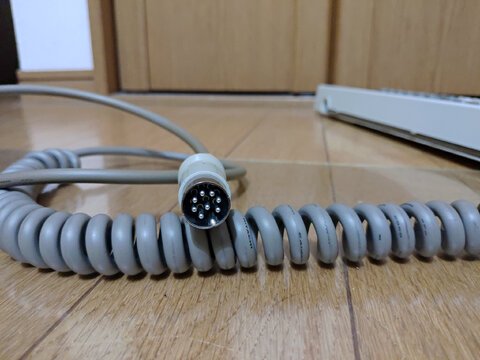 The system disks have a great presentation! 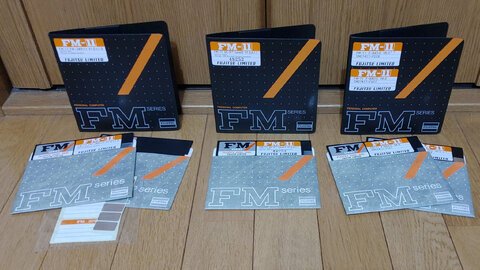 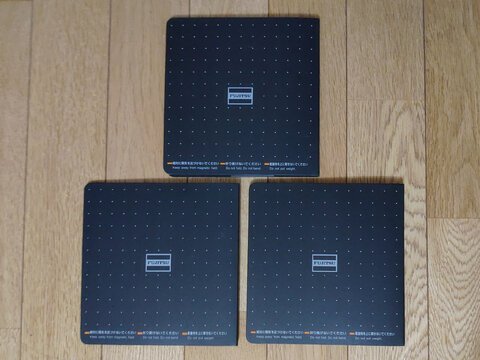 Going in order of increasing excitement, the first stop is the Japanese word processor. The FM-11 AD2 had a commendable 128KB of RAM, pretty good for an 8-bit machine, but not enough to handle kanji conversion in hardware. This almost certainly had a kanji ROM board similar to the optional one for the FM-7, and conversion happened by looking up character codes on disk. Unusually, this Japanese word processor used unconverted romaji to search its dictionary, so like "shoku" would bring up "食 色 職" etc. and you choose which one you want. It handled some compounds, I can't exactly remember which ones I discovered but perhaps "shokuji" would automatically convert to "食事" and insert it directly into the document without prompting. Going in order of increasing excitement, the first stop is the Japanese word processor. The FM-11 AD2 had a commendable 128KB of RAM, pretty good for an 8-bit machine, but not enough to handle kanji conversion in hardware. This almost certainly had a kanji ROM board similar to the optional one for the FM-7, and conversion happened by looking up character codes on disk. Unusually, this Japanese word processor used unconverted romaji to search its dictionary, so like "shoku" would bring up "食 色 職" etc. and you choose which one you want. It handled some compounds, I can't exactly remember which ones I discovered but perhaps "shokuji" would automatically convert to "食事" and insert it directly into the document without prompting. 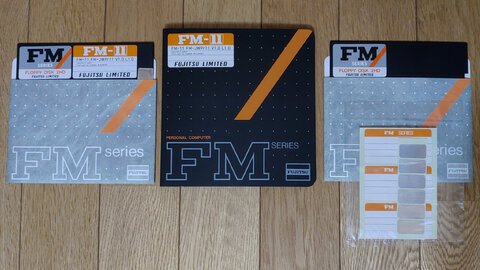 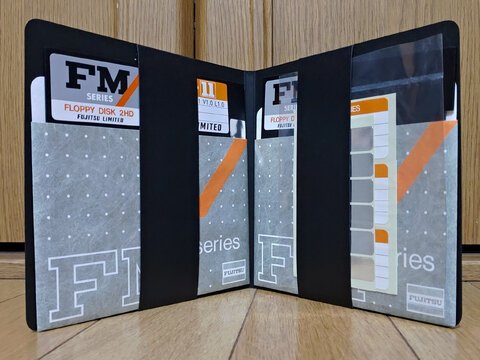 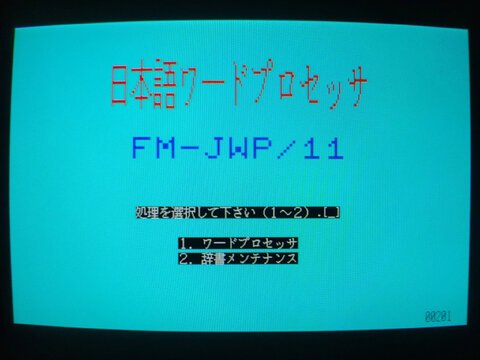 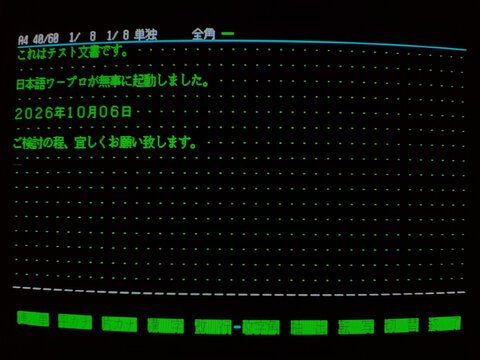 Next are the BASIC brothers, F-BASIC 4 and F-BASIC 5. F-BASIC 4 is a bust, I guess they included it for 8"-disk compatibility, as it opens up and asks you how many 8" disks you have, and it doesn't even let you choose 0, you have to input at least 1. There is only a single visible file on the disk, and it isn't executable, so I'm not too clear on what it does. 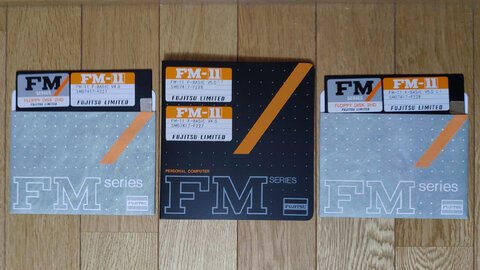 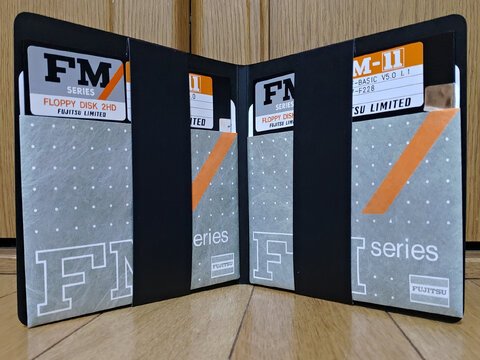 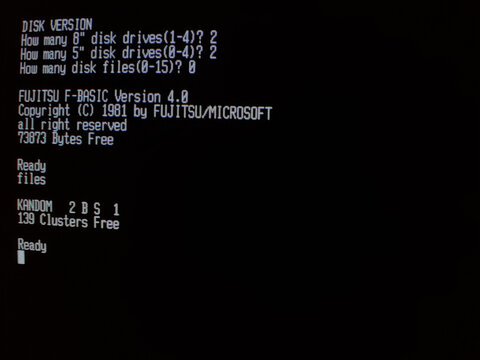 F-BASIC 5 is the main system BASIC. Among the usual assortment of utilities, it also came with this neat demo. The FM-11 is digital RGB but it's high resolution (640x400) so quite striking. Even those pie-and-graph charts *pop* in their own corporate-stuffy manner. 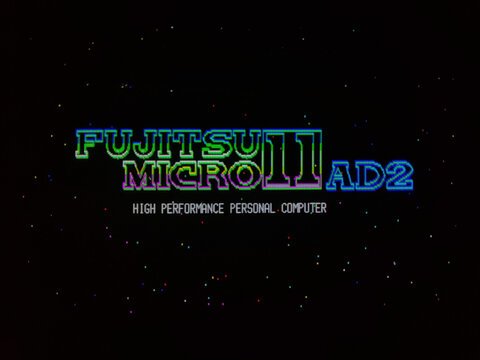 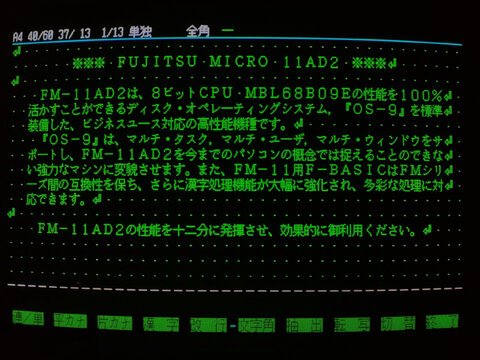 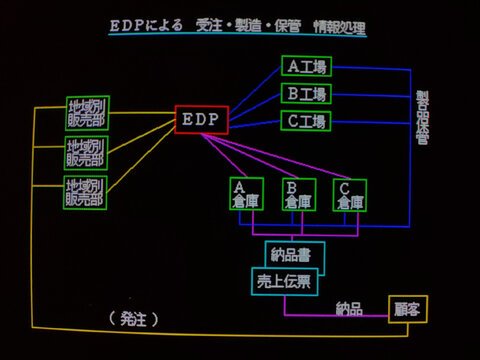 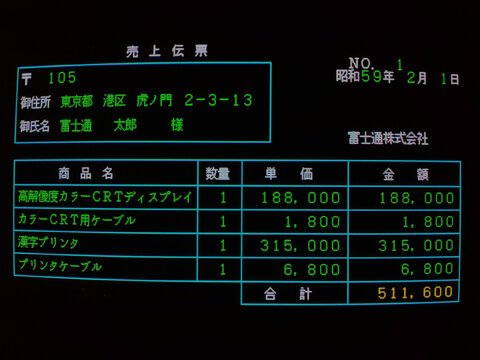 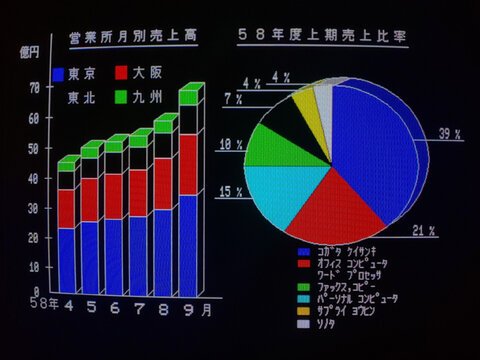 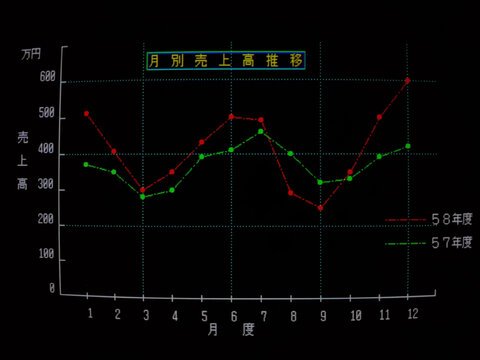 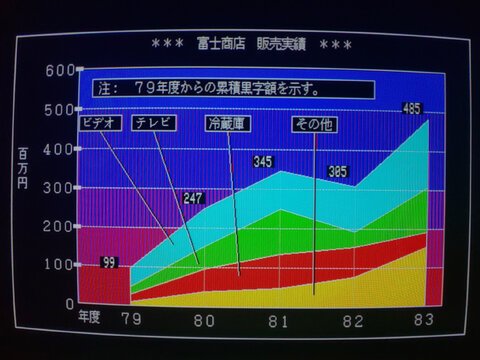 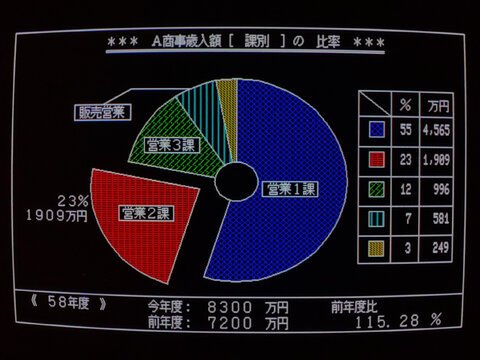 |
| 八 ビ ッ ト hachibitto |