 日本語
日本語
This article covers two X68030s: one that didn't work properly from the get-go, I poured a lot of money into it, and it still didn't work right, and the other that did work properly right off the bat, but cost a lot of money anyway. The first one I bought on an impulse, for an X68030 the price wasn't too bad and it came with a couple of extras. It comes in the traditional X68000 twin-tower style case, with a nice crimson red accent on the name plate. It was in quite good condition, with just a bit of light scratching here and there. 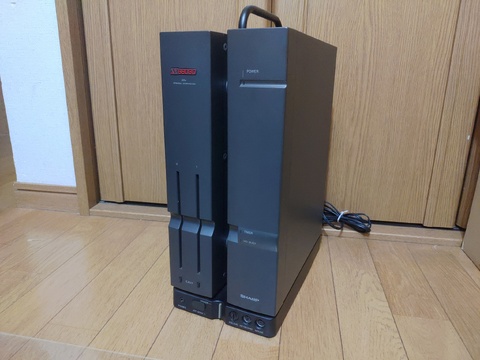 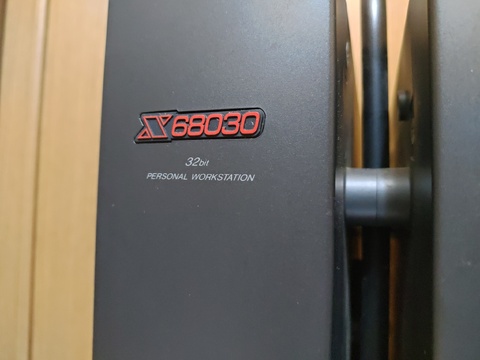 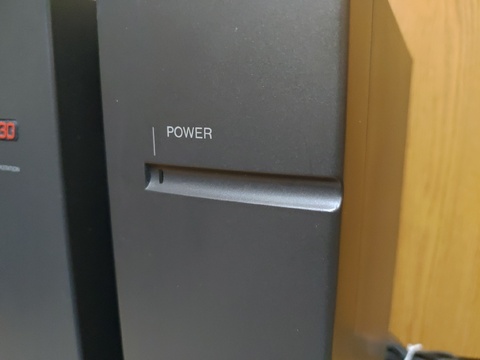     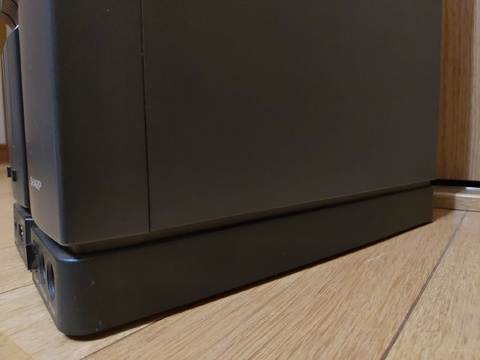  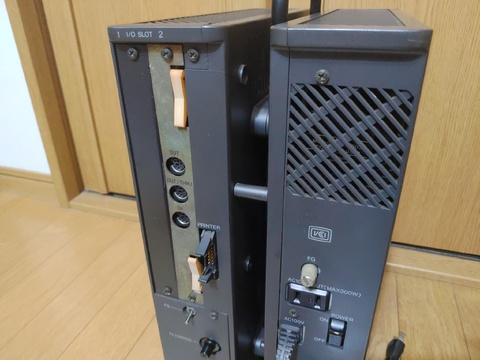 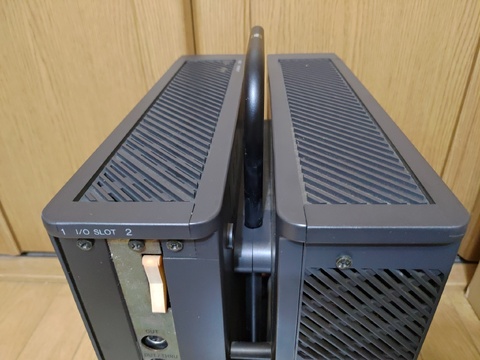       The main system was nice, but the keyboard was just immaculate, so much so that I was almost afraid to use it. I like to have good-looking equipment but if it hasn't even had its first scratch, it's a little daunting because a single bump can decrease its value substantially. Anyway, I carefully photographed it for posterity.  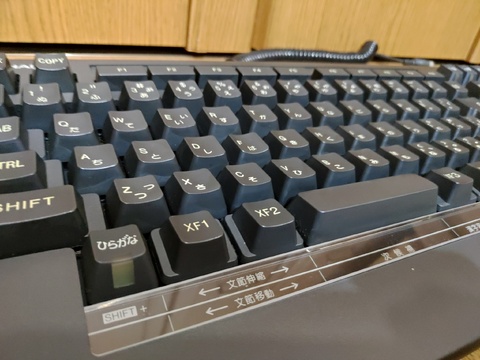 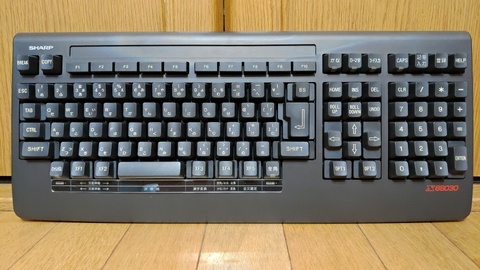  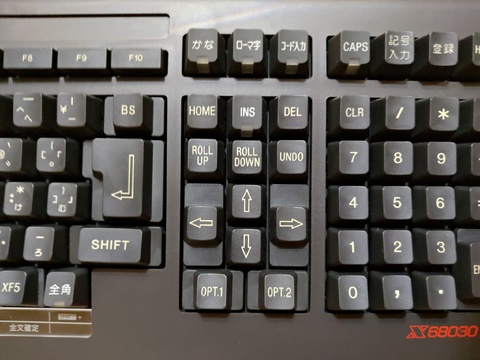   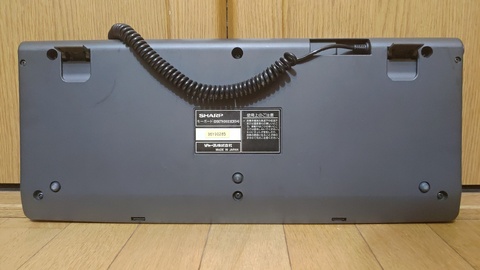 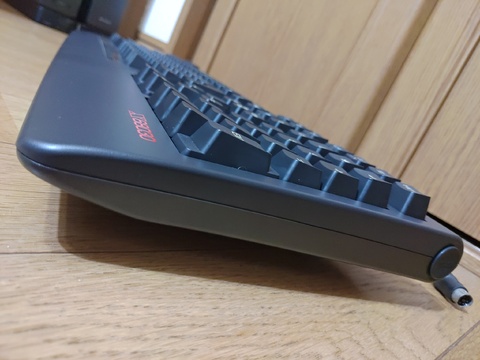  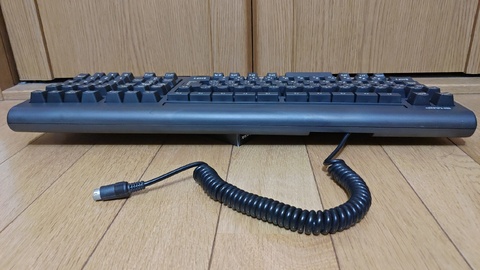 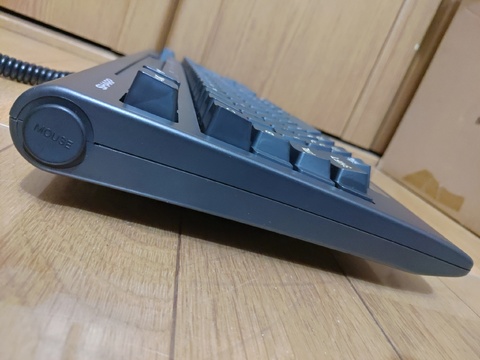  It arrived to me with this very browned and dirty-looking cover, and I was pretty shocked to see how nice it was underneath. I guess the cover really did its job! The second photo is the cover on top of an unrelated white keyboard just so you can see how browned it was. I was able to remove a bit of the discoloration by putting it out in the sun briefly and now I use it on my X68000 keyboard.  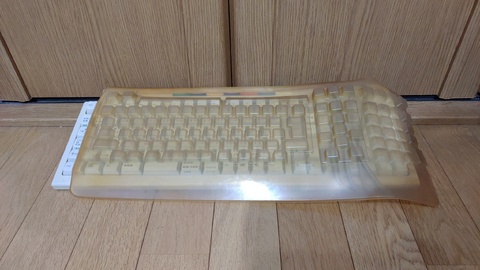 This X68030 was untested but powered on when I got it. I was able to get it to display a little bit, it showed the initialization screen displaying the specs of the CPU and RAM, but no further. I sent it to my trusty repair guy and he wasn't quite able to work the magic this time. It got to the point where it booted properly if you had disks, so that was a big improvement, but if you didn't have disks the initialization sequence was quite abnormal and never actually prompted you for media. This was at least enough to get some photos of it in action, which is when I ran into the reality - very little software for the X68000 works out of the box on the X68030. So the below is about as far as I could test it working. Human68K worked if you have version 3.0 or greater, and for some reason, the opening demo of AquaLes works beautifully, but none of my other games would. If I could connect my hard drive emulator to it, I would have a lot more options, but this uses a different SCSI connector that I haven't yet been able to track down.      Since I wasn't able to do much with it, I sold it, but because I'm inexplicable, I bought another one. Well, maybe there is some decent logic behind this decision. It came with a full set of the original software, so I had a bit more to play around with this time. This machine was apparently upgraded, having its MC68EC030 replaced with a standard MC68030, providing an MMU, and they also added an FPU, so for software that was written to take advantage of it, I suspect it's pretty keen.  Here it is running SX-Window 3.1, the most recent version of the GUI for the system before Sharp basically departed for the MS-DOS/Windows world.  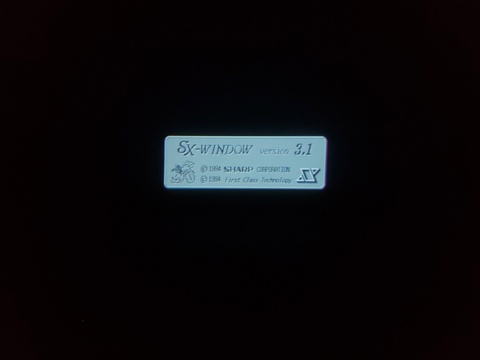 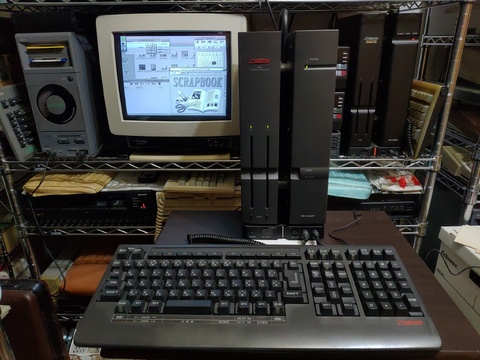        |
| 八 ビ ッ ト hachibitto |