 日本語
日本語
Rumored to be a bit different flavor of MSX, the FM-X has been a point of curiosity for me for a while. On the heels of just missing a real bargain on one (because I failed to set an alarm), I settled for an okay deal on this one. It's quite clean, and comes with the original manual, so that sweetens the pot.    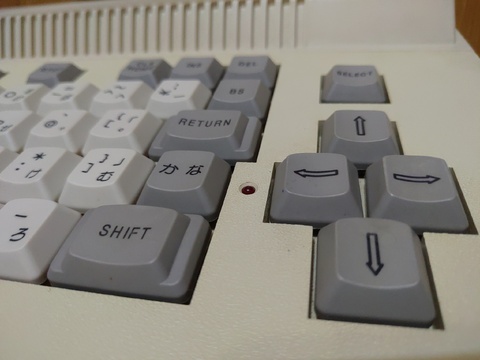  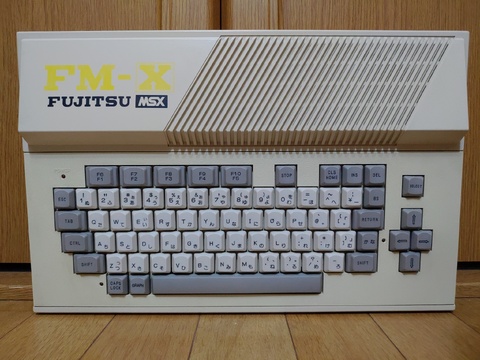   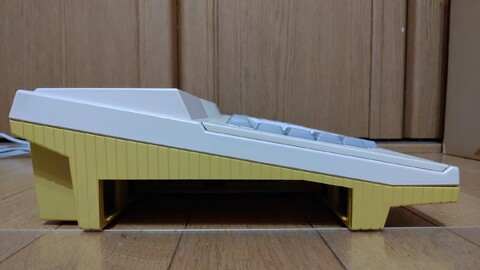  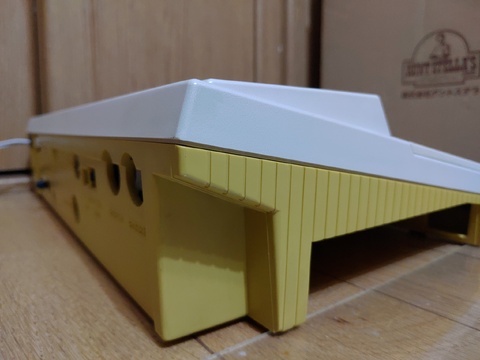 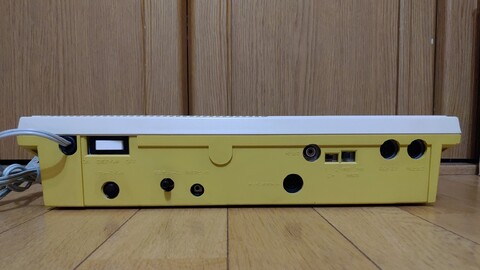 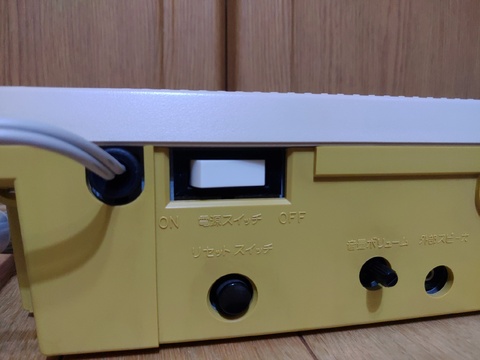 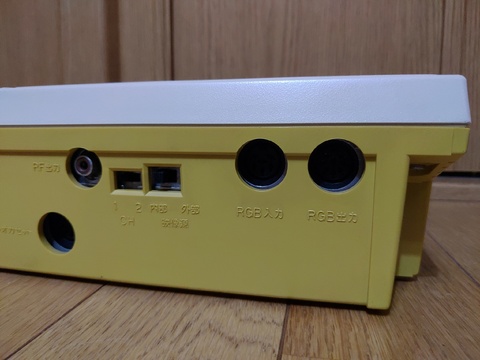 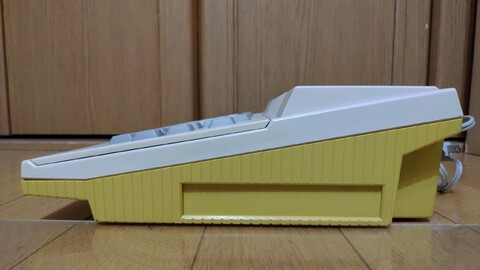 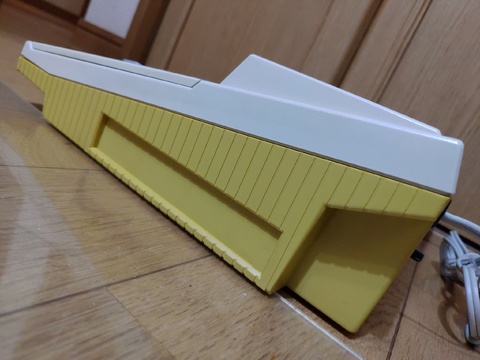 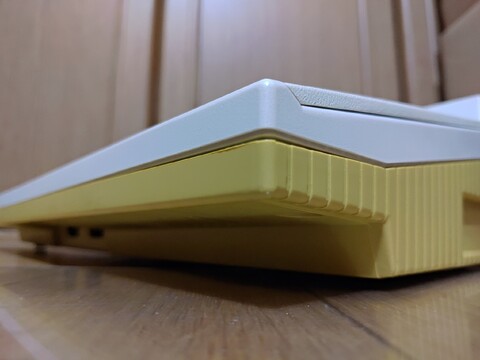   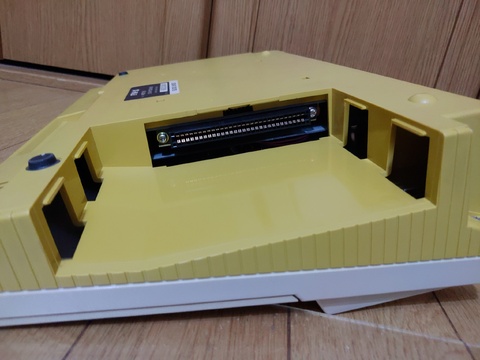  Notice anything unusual for an MSX system? There are a handful of things you can see just from the above photos. The most striking is the digital RGB video support. I have not seen any other MSX that supports digital RGB. I believe all of the MSX2s and above, as well as a few MSX1s, support analog RGB, but digital is all but non-existent in the MSX world, save for this machine. And not only is there digital RGB output, but there's also digital RGB input. The flip side of this is that (also unique to this MSX) there's no composite output. Your output options are digital RGB and RF. And that's not necessarily an easy choice! Each has a big trade-off. Digital RGB is gloriously crisp and easy to read, but it only supports 8 colors. RF is noisy and artifacty, but supports all 16 colors. The best way to see the difference between digital RGB and RF is to look at them side by side, so here are some comparisons. Which is better? Well, back in the day you made due with whichever you had access to. But these days we can choose. And it ultimately comes down to which sacrifice you want to make. But I think many would agree, if you have access to both, use digital RGB for heavy text applications, such as BASIC, word processing, and maybe text-heavy games, because it's easy on the eyes. Then use RF for typical gaming and image manipulation so you can get that full palette. 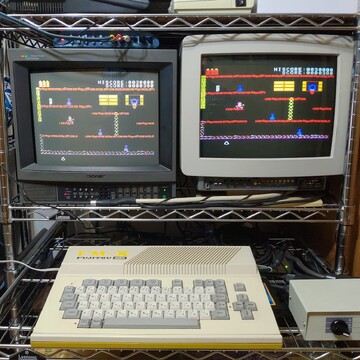       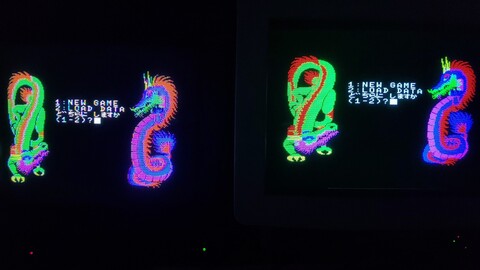  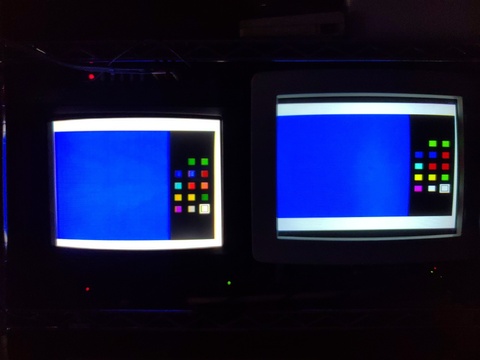 By the way, almost all computers of the era had internal speakers because digital RGB doesn't carry audio, and almost no digital RGB monitors have speakers. MSX is one of few exceptions that do not have internal speakers, because you often connected them to a TV, which have speakers. So Fujitsu mitigated that situation and installed an internal speaker in case you wanted to use digital RGB. But the digital RGB, lack of composite video, and internal speaker are just the tip of the iceberg when it comes to differences between this MSX and more standard MSX models. And unfortunately, I can only experience that tip of the iceberg because all of the other differences come in the form of a module that gets installed in that gaping cavern in the bottom of the case. The module allows you to connect to an FM-7 and share computing resources between the two. It's really quite unique. The FM-X can: - take control of some of the FM-7's memory, allowing you to expand from the default 16KB to 32KB - use the FM-7's serial port, if installed - borrow some of the FM-7's keyboard (I imagine this is the numeric keypad but I am not sure) - access the FM-7's machine language monitor - utilize the FM-7's PSG (programmable sound generator), doubling the voices the FM-X has available The FM-7 can: - also utilize the FM-X's PSG, doubling the voices the FM-7 has available - harness the FM-X's sprite capabilities (FM-7 had no hardware sprite support, so even MSX1's simple sprites were an improvement) - employ the FM-X's joystick ports (the FM-7 had no built-in joystick support) - take control of the FM-X's CPU Now, *that* is cool! In a sea of MSX models that differ primarily on memory and aesthetics, with the occasional attempt at adding a twist to try to stand out from the herd, Fujitsu went and created a really unique experience. So you're probably imagining the shelves-full of games and applications that were prepared to take advantage of all of these features, to feed the huge market segment that has both an FM-7 and an FM-X. right? Yeah, zero commercial software, I imagine. I might guess there was a tape included with the module that demonstrated some of these functions, made by Fujitsu, but I can't claim to have ever seen it. Besides that, it's just whatever you decide to do with it. I didn't pay much attention at the time of bidding (actually this is quite common for me, unfortunately), so I didn't realize at the time, but this isn't the most technical of the manuals, just a bit of an overview of the system and a few sample BASIC programs for the most part. But it does give the pinouts for all of the ports, including the expansion module for connecting to the FM-7. I guess if you're going to build your own, that's somewhere to start! Sooner or later I will put it on archive.org.    |
| 八 ビ ッ ト hachibitto |